
Revolutionizing Fashion The Role of Clothing Remover AI

In an era where artificial intelligence is transforming various industries, the emergence of clothing remover ai stands out as a noteworthy development. This technology is not just a novelty; it has significant implications for the fashion industry, digital media, and privacy concerns related to image processing.
Clothing remover AI refers to a category of advanced machine learning algorithms designed to detect and remove clothing from images and videos. While this technology can seem controversial, it has various applications that extend beyond mere image manipulation. In this article, we will explore the functionality of clothing remover AI, its applications in fashion and marketing, and the ethical considerations surrounding its use.
Understanding Clothing Remover AI
At its core, clothing remover AI utilizes deep learning techniques, particularly convolutional neural networks (CNNs), to analyze images. These neural networks are trained on extensive datasets that include a variety of images featuring people in different poses, clothing types, and backgrounds. By training on such data, these models learn to recognize clothing features and subsequently remove them while retaining the underlying structure of the human body.
One of the pivotal technologies that drive clothing remover AI is a generative adversarial network (GAN). GANs consist of two neural networks: the generator and the discriminator. The generator creates images (or in this case, images with clothing removed), while the discriminator evaluates these images against real data. Through this process of competing with one another, both networks improve, leading to high-quality outputs.
Applications of Clothing Remover AI
While the technology may initially seem to cater to sensationalism, it has practical applications in various sectors.
Fashion Industry
The fashion industry is one of the primary beneficiaries of clothing remover AI. Brands are increasingly utilizing AI-driven image manipulation to enhance marketing campaigns. For instance, retailers can showcase garments on models with different clothing combinations, thereby allowing consumers to visualize how a piece might look in various settings.
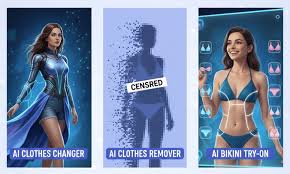
Additionally, clothing remover AI enables fashion designers and marketers to conduct virtual try-ons. By digitally showcasing how pieces fit on various body types without physically dressing mannequins, brands can save time and production costs associated with traditional photoshoots.
Digital Marketing and Advertising
In the realm of digital marketing, clothing remover AI can be used to create more engaging and tailored advertising content. By removing clothing digitally, marketers can create tailored outfits for their target audience, using data-driven insights into consumer preferences. This provides a more personalized shopping experience, which can drive sales and enhance customer satisfaction.
Education and Research
Academically, clothing remover AI opens up avenues for research in fields like anatomy, computer vision, and artificial intelligence ethics. It provides valuable insights into how AI can interpret complex human forms and gives researchers a tool to study the implications of AI in human-centered industries.
Ethical Considerations
Despite its potential applications, clothing remover AI raises significant ethical concerns. The capability to manipulate images so dramatically leads to questions regarding consent and privacy. A key aspect of ethical AI use is ensuring individuals’ images are not altered without their express permission. Misuse of this technology could lead to harmful consequences, such as the creation of misleading images or even cyberbullying.
Additionally, the fashion industry must navigate the broader conversation about body image and representation. While presenting an “ideal” body type can enhance marketing strategies, it may contribute to unrealistic beauty standards and negatively affect consumers’ self-esteem. Brands and technology companies need to collaborate closely to develop guidelines that prioritize ethical standards in the use of AI technologies.
The Future of Clothing Remover AI
As clothing remover AI technology continues to evolve, the future holds promising possibilities. With advancements in AI algorithms and image processing technologies, we can expect to see improvements in accuracy and efficiency. In addition, interdisciplinary collaboration will likely enhance the ethical frameworks surrounding the use of AI, ensuring that it serves the best interests of consumers and society as a whole.
Moreover, as augmented reality (AR) and virtual reality (VR) become more integrated with digital marketing, the role of clothing remover AI could expand significantly. Brands might offer fully immersive shopping experiences where consumers can see how clothing fits in real time, embedding this technology into the shopping experience much more deeply.
Conclusion
In summary, clothing remover AI represents a fascinating frontier in the intersection of technology and fashion. While it offers incredible potential for enhancing digital marketing, personalization, and educational applications, it also necessitates a careful examination of ethical implications. As we stand on the brink of a new era in AI and image processing, it is crucial that stakeholders—from fashion designers to consumers—engage in conversations surrounding the responsibility that comes with such powerful technology. By approaching clothing remover AI with foresight and integrity, we can harness its capabilities to foster innovation while adhering to ethical standards that protect individual rights and societal values.